

From Sacred Waters to Sacred Service: A Vedic Journey to Trinidad

Updated: Apr 20
"Sararipū nadī tīrē should be used in SANKALPA by all Pundits in Trinidad" Pt Durga Prasad Sharma……..

Saṅkalpaḥ: -Mamōpātta samasta duritakṣaya dvārā śrī paramēśvaramuddiśya, śrī paramēśvara prītyarthaṁ, śubhē, śōbhanē muhūrtē, śrī mahāviṣṇōrājñayā, pravartamānasya, adya brahmaṇaḥ, dvitīya parārdhē, śvētavarāhakalpē, vaivasvata manvantarē, kaliyugē, prathamapādē, trinidhāna dvīpē, kētumāla khaṇḍē, sararipū nadī tīrē….
In Trinidad, there are places that are not experienced merely as geography, but as Divine Grace. Aripo is one such place!
Aripo Datta Ganga Kshetra, located just before the Aripo Village in the heights of Aripo is not simply a river or a natural spiritual retreat nestled in the landscape of Trinidad. It is revered as a sacred current, a site of divine power, peace, and inner renewal. Through the teachings of Sadguru Sri Ganapathy Sachchidananda Swamiji, fondly called as Sri Dattaji, or Sri Swamiji, devotees have come to understand Aripo as a place of deep divine significance. With that faith, the waters are worshipped as Mother Ganga Herself--not as ordinary waters-- carrying sanctity, healing, purification and the subtle presence of the Saptarishis.
This reverence is rooted not only in doctrine, but in lived experience. Those who come to Aripo with devotion often speak of its calming and purifying effect. Its profound stillness seems to quiet the mind. For the layman bather as well as to others of different faiths, and our Hindu brothers and sisters of other temples or followings, its waters lighten the burdens of the heart. For many, a visit to Aripo is not recreational, but sacred — an act of pilgrimage, a teerat, and an opportunity to reconnect with the divine. Many devotees testify to its healing power!
In Vedic thought, all life is formed through the pancha bhootas — the five great elements: earth, water, fire, air, and space. These elements constitute not only the physical universe, but the human body itself. Water, in particular, holds a deeply purifying and life-sustaining role. Through the subtle functioning of the pancha pranas, (the five vital Airs,) life energy moves through the body, while sacred waters restore, nourish, and spiritually elevate it. In that sense, the reverence for Aripo Datta Ganga reflects an ancient spiritual vision: that nature not only heals but can elevate us to being closer to discovering who we truly are! True faith and devotion are ‘sine qua non.’
Revelations of Sri Dattaji:
Yet sacred places do not live only through belief. They also live through service, memory, and the people who dedicate themselves to preserving their significance. We owe it to our Datta Guru Sri Swamiji, that the knowledge about Aripo Datta Ganga being a sacred Kshetra or pilgrimage place (such as Ganagapura, Prayaga and even Mekedatu) in India, has been revealed. Let us not forget our ancestral roots! Dattaji pointed out similarities exist here just as in India’s most sacred Kshetras. These include the presence of a holy river with a Sangam (a meeting of two or more streams) which we know today as Aripo, in ancient times part of Mother Ganga; a consecrated Shiva Lingam, a sacred tree, the Audumbara Vriksha and the Divine Padukas of Lord Dattatreya, who is the Hindu Trinity of Brahma, Vishnu and Shiva in One Form! The natural beauty of the hills and peaceful, green surroundings also encourage the serious seeker into meditation and yoga.
In Trinidad today, the spirit of sacred service is embodied not only in the reverence shown to Aripo Datta Ganga, but also in the journey of the Indian Pandit who now serves the community here as the main Pandit of the Dattatreya Yoga Centre in Carapichaima. Pandit Durga Prasad Sharma himself reiterates what the Guru revealed, “Aripo Datta Ganga was the same place where Sri Dattaji had an Ashrama in a previous birth ages ago. He was the Rishi for this land of Trinidad –Aripo Muni Raja!”

Pandit Durga’s story began in India, where he entered Vedic study at the age of nine. In 2008, he began formal training in Krishna Yajur Veda at the Pitapuram Ashram. What followed was not merely academic learning, but a demanding life of strict discipline, recitation, memory, and spiritual formation. Over the years, he immersed himself in the study of the Veda, eventually completing the Kramanta level — a major stage of Vedic education that represents years of sustained commitment and mastery.
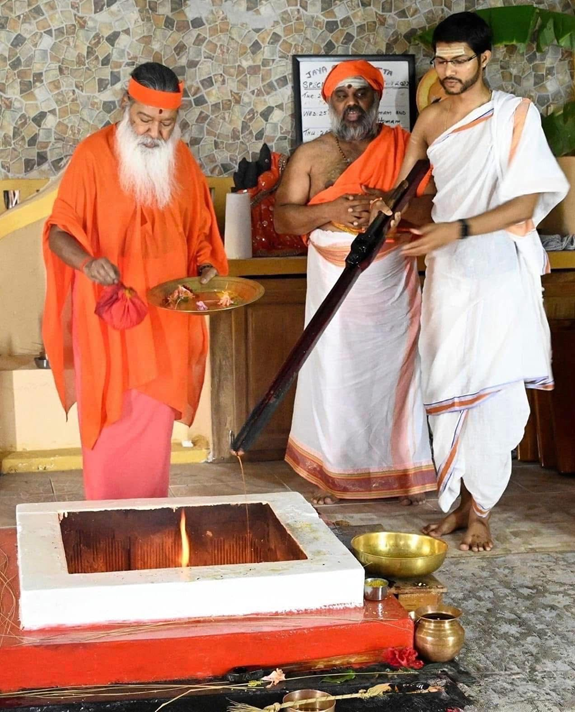
Then under the guidance of Acharya Dr. Vamshiji, in Mysore, alongside traditional learning, students like him were encouraged to develop practical skills such as Sanskrit, English, and basic technological literacy. The aim was clear — to prepare them not only to preserve Vedic knowledge, but to advance it wherever seva/service might call them.
With the blessings of his parents and teachers, He completed his advanced training and qualified in Krishna Yajur Veda Kramanta recitation through several examinations conducted by recognized institutions and examination bodies. In time, he also became a teacher, serving in Dr. Vamshiji’s school, Veda Vijnana Vishtaram. There, he taught younger students foundational practices such as sandhyavandanam, stotras, suktas, and introductory Vedic recitation. His life had already begun to take the shape of transmission — receiving tradition, then passing it forward.

Then came the turning point! His Sadgurudeva expressed the wish that he travel to Trinidad for service. The matter was discussed with permission given by his mother and authorities, and he willingly embraced his Guru’s will. In March 2023, he arrived in Trinidad.
In this light, his presence in Trinidad is not simply the story of a trained pandit relocating from one country to another. It is the continuation of a sacred current. The same spirit that leads devotees to Aripo Datta Ganga in search of purification and connection is the spirit that has also brought a Vedic scholar to these shores. One speaks through its pure water, the other through mantra and exemplar service. One sanctifies the land, the other sanctifies human life through rituals, worship, and teaching. Together, they reveal how sacred tradition takes root in a land.
He says, “I have been here in Trinidad three years now and have taken many baths in Aripo. What is my experience of the river? We must protect the earth and all its sacred gems, right? Aripo is one such natural gem in Trinidad. Its power and vibration can be felt by all who have taken a bath in its water. Like Mother Ganga, Aripo’s effect can relieve the mind from stress of the world and purify a sinner once we perform sincere worship or bath with full faith and devotion! Each visit to Aripo has been like a teerat to Mother Ganga, and nothing less. We must continue to protect and preserve this sacred Aripo Datta Ganga and appreciate its significance in our spiritual life with our Sadguru Sri Dattaji.”
Powerful Sankalpa
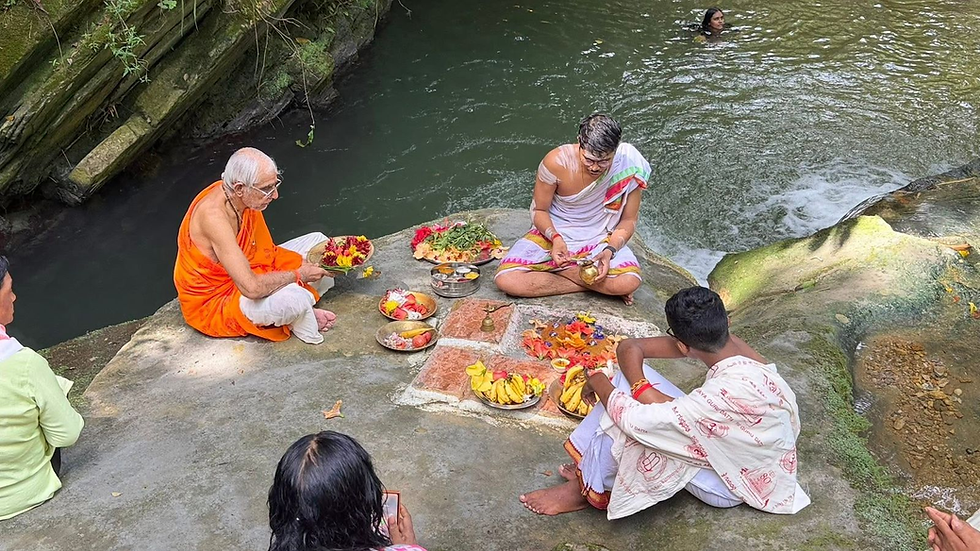
“In Puja, we invoke the blessings of our sacred holy waters in the land where the puja is taking place, so that its energy can have a positive result in our prayers. That's why we repeat in Sankalpam- ‘sararipū nadī tīrē (teeray). If you are close to some other river, like Kaveri, in Mysore, we say ‘Kaveri Nadi tīrē’. In Andhra Pradesh, we say ‘Godavari Nadi tīrē’.
Nadi is always moving or remains still at times, that's why we refer to it as Nadi (current). There are sacred spiritual stories which describe how Ganga was born, Bhagirathi, different stories. Same Ganga, but in Trinidad, Sri Swamiji introduced the Aripo Ganga for the benefit of all Trinidad people. He coined it Aripo Datta Ganga. In Puja, that energy can have a most positive result in our prayers. That's why we say Aripo Ganga Nadi tīrē, or Sararipu Nadi tīrē. In each Sankalpam prayer we are remembering Aripo. So I'll say every day, Aripo Datta Ganga Nadi tīrē, in each Puja. That way it is more potent. I feel that all Pandits should use it since we have such a sacred gem right here!”
“There’s only one Ganga.
In Trinidad there's none other than Aripo, so they must say the name. Ganga is in India, so it will flow in everything through India, but here it has a different name. Same Ganga, but you should say the correct name. Waters are same. For example, Kaveri water is in Karnataka State; if same Kaveri water goes to a different place, its name changes to that place in Sankalpa and there will be some related story and the name will change. Similarly in Trinidad, we must say Aripo Datta Ganga or Sararipu Nadi tīrē.”
“So, if Pandits here also use Aripo Nadi tīrē it will bring great vibrations and energy to this land and of course, to devotees! Even I feel Aripo is the same Ganga water. There is no lesser value. There is no difference! Bala Swamiji, (Sri Datta Vijayananda Teertha Swamiji) the Datta Peetham Junior Pontiff, said the same thing.

Even Pujya Dattaji asked when I reached Ayodhya for my visit home, (December2025) “Did you bring Aripo water?” So I gave it to Him! As soon as Dattaji get that water, Dattaji sprinkle himself. Why? Because Swamiji is saying that it's Aripo Datta Ganga. Pujya Bala Swamiji also asked, “Where is Aripo Datta Ganga water?” He didn't say Ganga water.”
Preservation an act of gratitude
For those who have visited Aripo over the past years, its significance has not only grown stronger, but each visit can feel like an experience with something ancient and intimate at once — a reminder that Grace can be had in this land itself. To preserve Aripo Datta Ganga, then, is not merely an environmental concern, though that too is important. It is a spiritual responsibility. It is an act of gratitude toward a place that has become, for many, a source of solace, purification, and devotion. The call, therefore, is twofold: to preserve the sanctity of the river, and to honour the ancestral tradition it sustains. Just as sacred waters are invoked in puja so that the land itself participates in prayer, so too must devotees ensure that these natural spaces remain respected, protected, and clean. Reverence must be visible not only in ritual or sankalpa but in service.
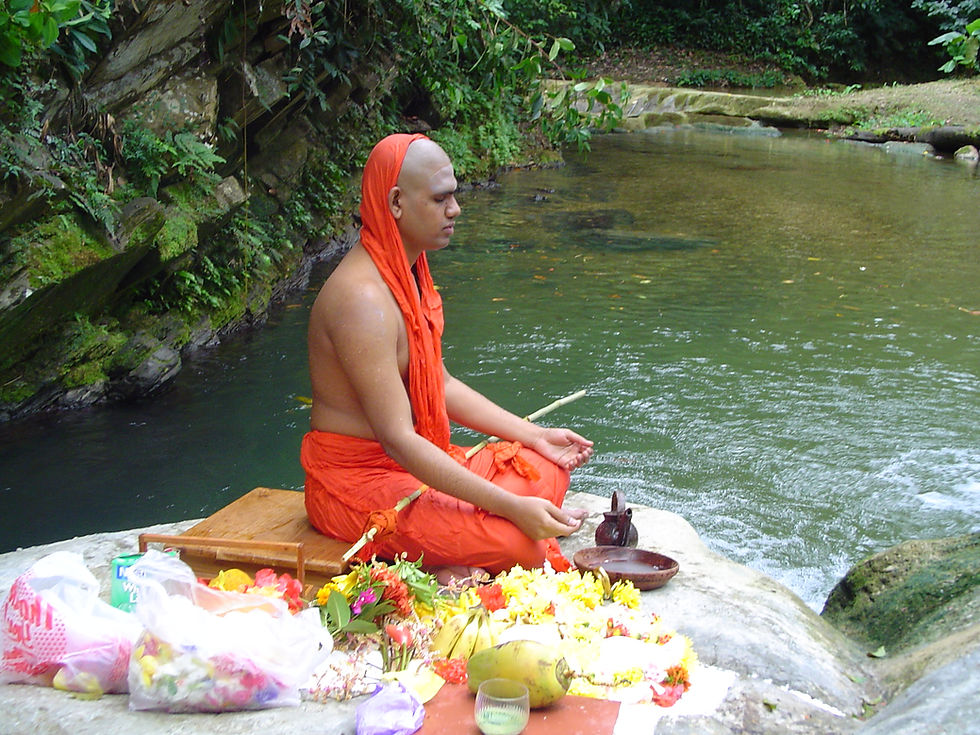
That is what makes this narrative like a Sangam: sacred geography, sacred lineage, and sacred duty meeting in one living context. Aripo is not holy in isolation from those who revere it, protect it, and deepen its meaning through worship. The journey of a Vedic scholar is not complete in studies alone, but in the offering of that knowledge in service to a spiritual community. In Trinidad, Aripo Datta Ganga stands as one of those rare places where the natural and the spiritual seem to meet without separation and alongside it stands a young Vedic scholar whose life has been shaped by years of study, discipline, and surrender to his Guru’s instruction. Their stories are not separate. They belong to the same spiritual landscape.
One is of a sacred flow of water. The other is a sacred flow of tradition.
In Trinidad, for the 50th. Anniversary (1976-2026) of its discovery, let's all contemplate and spread this invaluable, blessed guidance on Aripo by Sri Dattaji!
Aripo Datta Ganga ki, Jai!
Links ;
Contact Pundit Durga Persad Sharma at mdpyajurveda@gmail.com


Comments